
History
Morris Dancing
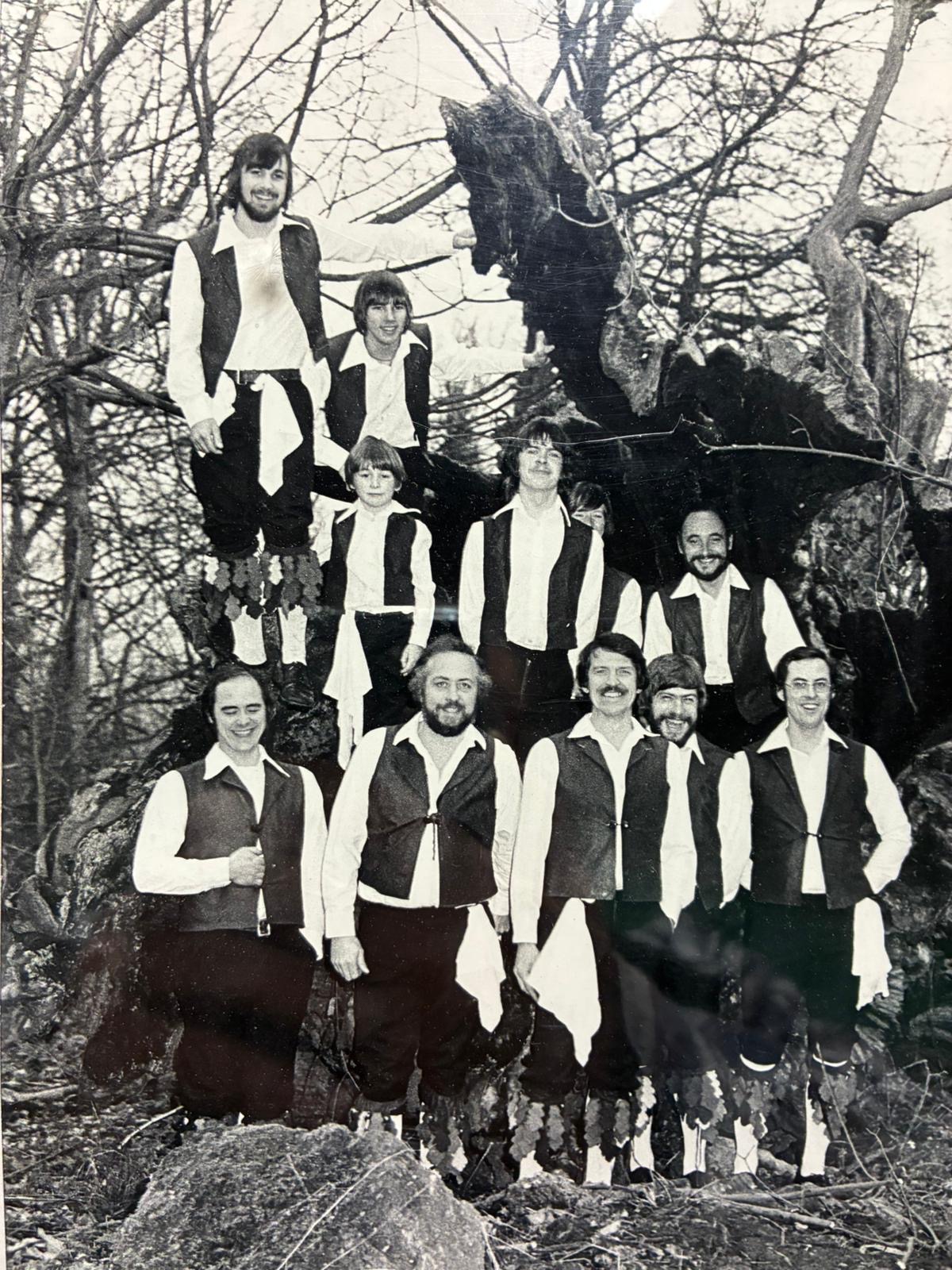
Lassington Oak Morris Men were formed in 1976 by a group of dancers from the Gloucester & Stroud area, with their first public performances being in 1977. They were renowned not only for their dancing, but as fine musicians and singers. In many ways this start was reminiscent of the village and family traditions of early Morris Sides.
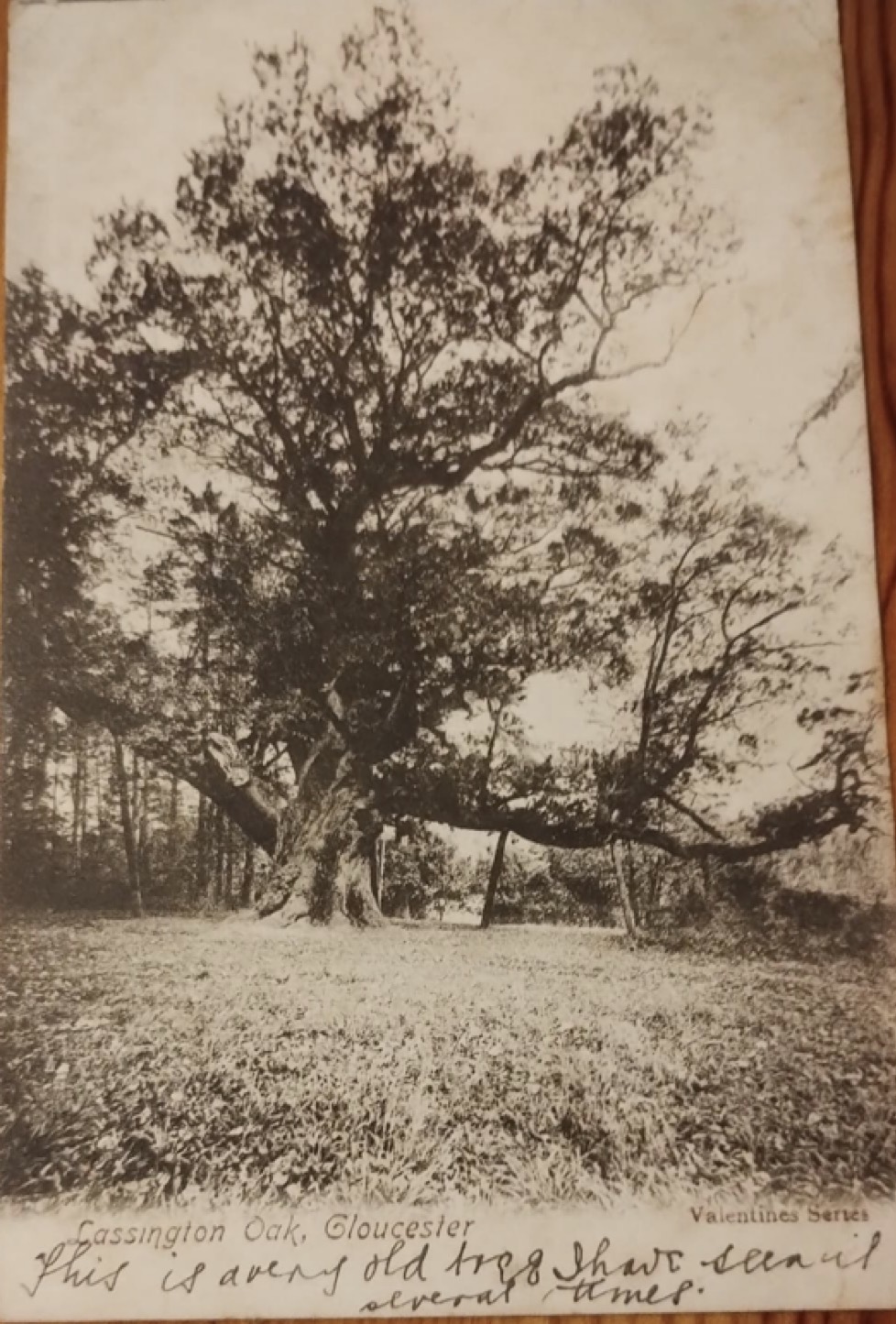
The side owes its name to an old oak tree to be found near the centre of Lassington Wood at Highnam, Gloucestershire. Unfortunately, the old oak has been lying on its side for many a year, but a new tree planted by the side is flourishing.
Unlike many morris sides our kit is fairly plain, consisting of white shirt and socks, black britches and brown leather waistcoat. The bell pads worn below the knees have colourful oak leaf shaped felts on the oak leaf shaped leather pads. The kit reflects the clothing worn by Morris Men in past centuries, who would have been farm labourers and ordinary working village folk. The oak leaf pattern for the bell pads is in honour of the once mighty Lassington oak tree in Lassington Wood in Highnam. Sadly the tree is no longer alive but its trunk is still there.
We dance in the Cotswold tradition, performing dances from a variety of villages including Bampton, Bledington, Adderbury and Fieldtown.
Mumming
Mummers’ plays are traditionally performed over the Christmas period and are believed to have their roots in pre-christian rituals. they are almost certainly older than morris dancing.
There are believed to be about 1,000 extant plays which fall into three categories: Combat Plays, Wooing Plays, confined to Rutland, Lincolnshire, Nottinghamshire & Leicestershire, which are normally sung or have an element of song in them, and Sword Plays originating from the North of England.
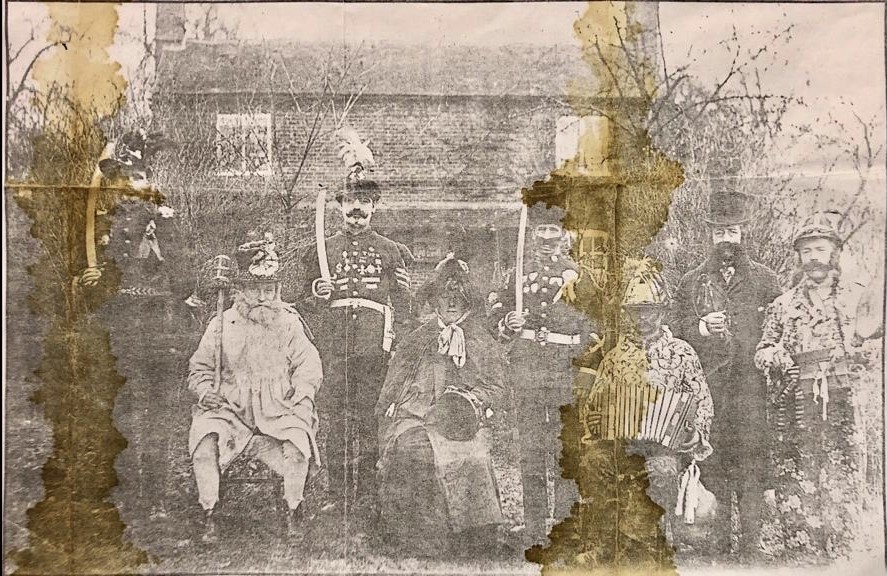
Lassington Oak Mummers perform the play from Highnam. The play was last performed in either November 1901, 1904 or 1918 by the Highnam Mummers, before being revived and performed by us for the first time on Wednesday, 18th December 1996 at The Dog, Over; The Tall Ship, Gloucester; The Whitesmiths Arms, Gloucester and The Fountain Inn, Gloucester.
Lassington Oak still take the Highnam mumming play on tour every December.
Central to all Mummers’ plays is the battle between light (personified by St George or King George) and darkness (personified by the Turkish Knight). The two fight and St George kills the Turkish Knight, significantly when the darkness is at its strongest. The quack doctor then “mysteriously” revives the Turkish Knight so the fight may continue the following year. Once this is complete various sundry characters follow who have little to do with the story line, and are later additions provided to encourage the audience to part with their money.
Every Village in England would have had its own Mummers’ Play at one time.
There are believed to be about 1,000 extant plays which fall into three categories: Combat Plays, Wooing Plays, confined to Rutland, Lincolnshire, Nottinghamshire & Leicestershire, which are normally sung or have an element of song in them, and Sword Plays originating from the North of England.
Lassington Oak Mummers perform the play from Highnam. The play was last performed in either November 1901, 1904 or 1918 by the Highnam Mummers, before being revived and performed by us for the first time on Wednesday, 18th December 1996 at The Dog, Over; The Tall Ship, Gloucester; The Whitesmiths Arms, Gloucester and The Fountain Inn, Gloucester.